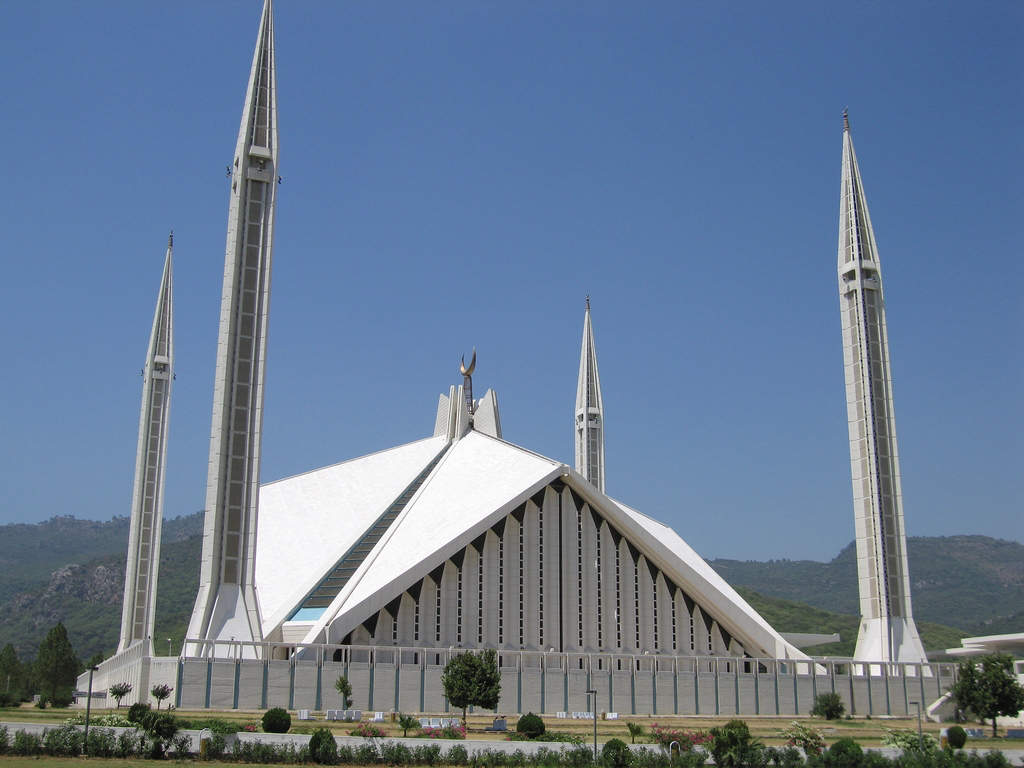
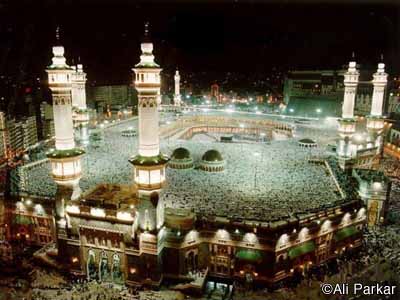
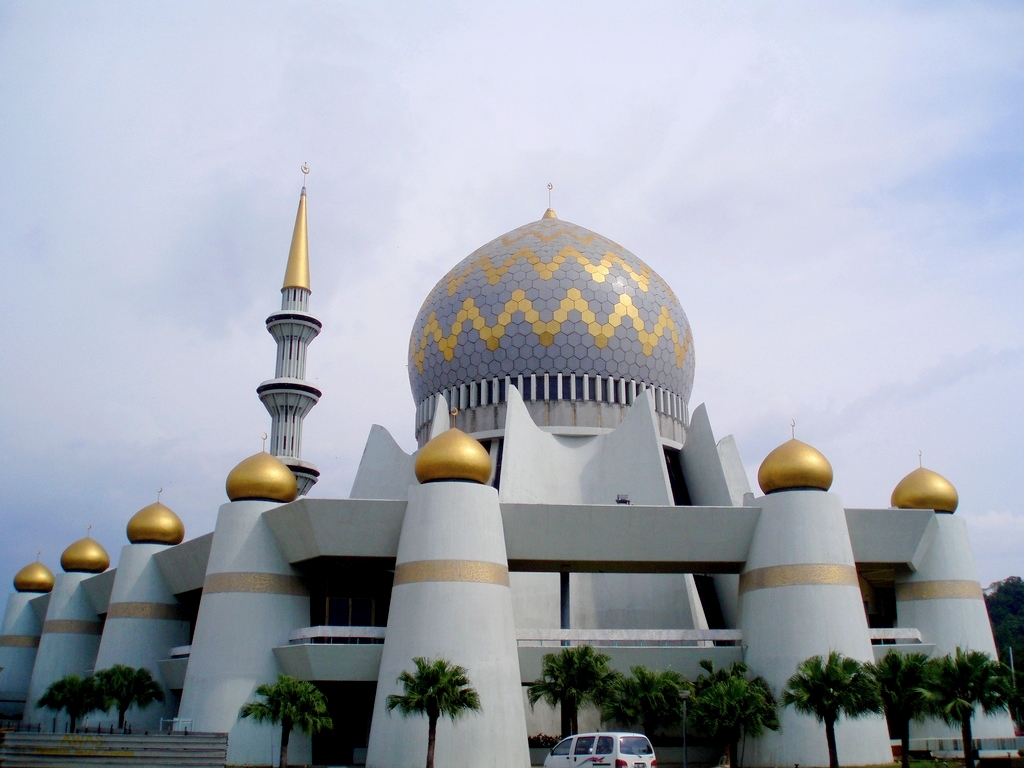
Islamic public place of prayer. The masjid jami’, or “congregational mosque,” is the centre of community worship and the site of Friday prayer services. Though the mosque — originally a sacred plot of ground — has been influenced by local architectural styles, the building has remained essentially an open space, usually roofed, with a minaret sometimes attached. Statues and pictures are not permitted as decoration.

The minbar, a seat at the top of steps placed at the right of the mihrab, is used by the preacher (khatib) as a pulpit. Occasionally there is also a maqsurah, a box or wooden screen originally used to shield a worshiping ruler from assassins. The minaret, originally any elevated place but now usually a tower, is used by the muezzin (crier) to proclaim the call to worship five times each day. During prayer, Muslims orient themselves toward the qiblah wall, which is invariably oriented toward the Ka’bah in Mecca. The mosque has traditionally been the centre of social, political, and educational life in Islamic societies.

Structure The basic elements of a mosque are a place large enough for the congregation to assemble, especially on Friday, the Muslim sabbath, and orientation so that the faithful may pray facing in the direction of the holy city of Mecca. The wall facing Mecca is called the qibla wall and is marked by a mihrab, which usually takes the form of a decorated niche. In later ages mihrabs became quite elaborate; they are decorated with wooden fretwork in Morocco, with carved and pierced marble in Syria and Iraq, and with lusterware tiles bearing quotations from the Qur’an in Iran. A mosque usually includes a number of distinctive elements: a mimbar (or minbar), a pulpit that is entered by a flight of steps and stands next to the mihrab; a maqsura, an enclosed space around the mihrab, generally set apart by trellis screens, in which the caliph, sultan, or governor prays; a minaret, a tower, usually built at one or more corners of the mosque, from which the call to prayer is sounded; a sahn, a courtyard, surrounded by riwaqs, colonnaded or arcaded porticoes with wells or fountains for the necessary ablutions before prayer; and space for a madrasa, a school that often includes libraries and living quarters for teachers and pupils. All the great mosques are resplendent with elaborate decorations, but the prohibition against imitating God’s works by creating living forms is always obeyed. Decorations are abstract, and geometric plant forms are so distant from their originals as to be unrecognizable.